Influence of channel bend curvature on debris-flow-driven avulsion on alluvial fans, explored through discrete simulations
MASTER’S THESIS · EAST CAROLINA UNIVERSITY · 2023
THE PROBLEM
Debris flows can leave established channels and spread rapidly across alluvial fans, creating hazards far beyond the active channel. Avulsion is often explained by a plug or deposit that forces the next flow outward. My thesis tested a more difficult possibility: can a debris flow escape a clear channel simply because of the way the channel bends?
RESEARCH QUESTIONS
I designed the study around three questions. Can avulsion occur in a channel free of clogs and prior debris? Do avulsions cluster in repeatable zones along curved channels? And does channel sinuosity influence how far—and how much—material travels after leaving the channel?
A PHYSICAL MODEL
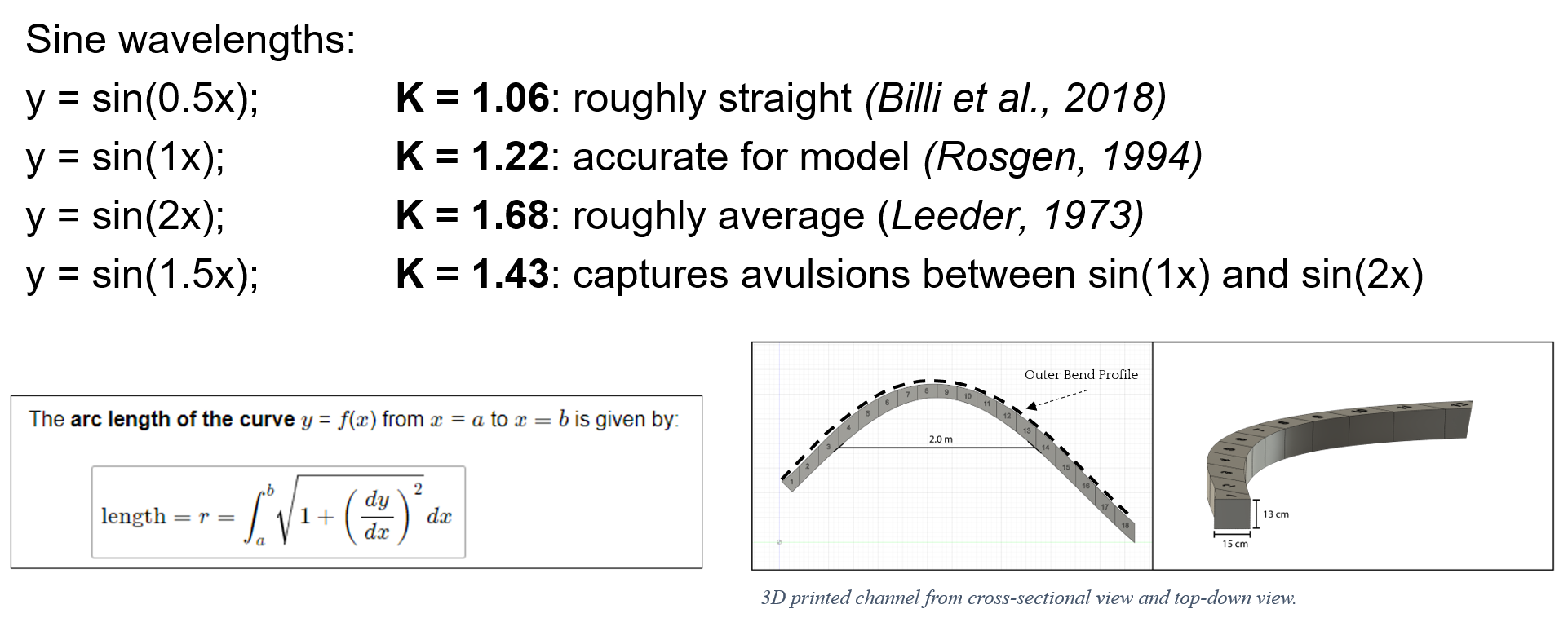
I conducted controlled simulations in East Carolina University’s Geomorphic Modeling Laboratory. Sediment and water were mixed in an agitation tank, released down a two-meter chute inclined at 30 degrees, and routed through interchangeable 3D-printed channels onto a simulated alluvial plain.
The channels followed sine-based planforms of increasing curvature. By changing geometry while holding the broader setup constant, I could isolate the role of bends in avulsion initiation and runout.
CAPTURE AND MEASUREMENT
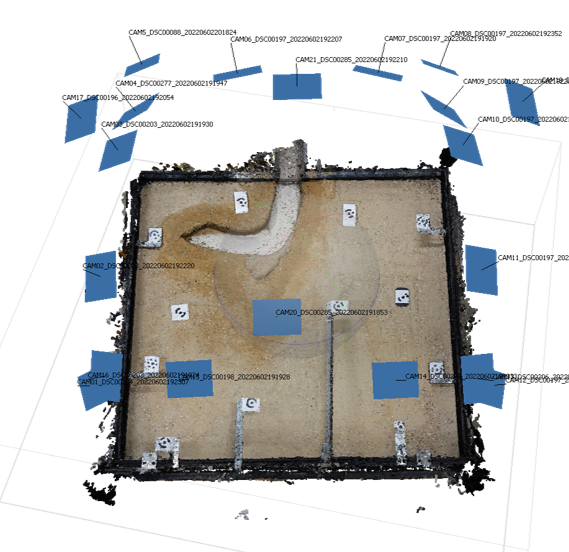
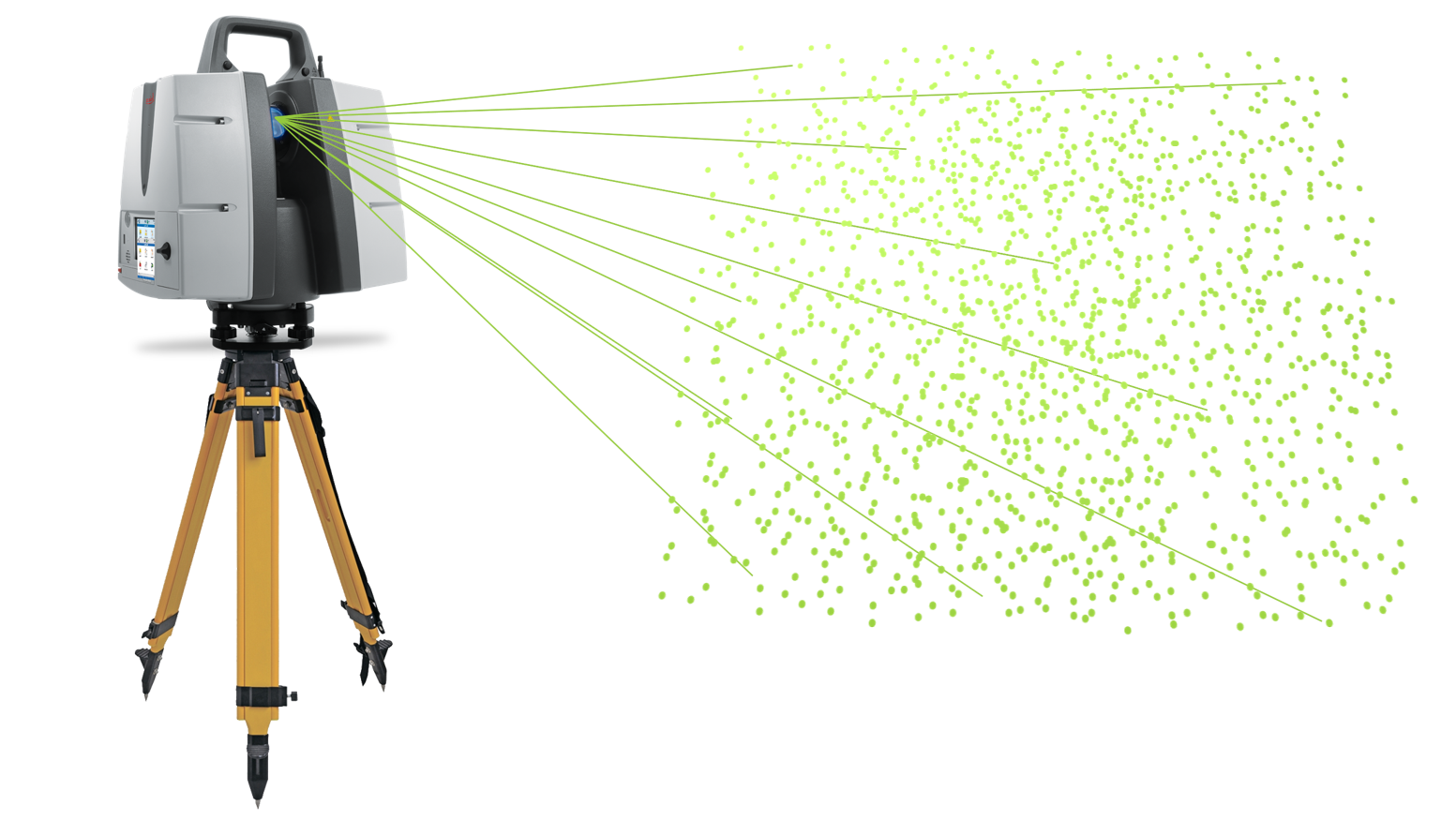
A Leica P40 terrestrial laser scanner established a common XYZ reference frame for twelve ground-control targets. For the experimental record, a synchronized array of twenty Sony RX0 II cameras photographed each surface from overlapping viewpoints.
I processed the imagery in Agisoft Metashape to align photographs, build dense point clouds, and generate digital elevation models. In ArcGIS Pro, I compared pre- and post-run surfaces, mapped avulsion locations, and measured inundated area, maximum runout distance, and deposited volume.
RESULTS
Avulsion frequency increased sharply with curvature in the successful trials. The sin(1x) channel produced 1 avulsion in 31 trials—3.2%. The sin(1.5x) channel produced 25 avulsions in 31 trials—80.7%. The sharpest sin(2x) channel produced 20 avulsions in 21 trials—95.2%.
The sharper sin(2x) geometry also produced the larger mean maximum runout and deposited volume: 45.79 centimeters and 480.5 cubic centimeters, compared with 28.35 centimeters and 158.5 cubic centimeters for sin(1.5x).
THE MECHANISM
The central finding was that a blockage was not required. As flow negotiated a bend, superelevation raised the debris-flow surface along the outer bank. In the more strongly curved channels, that rise was sufficient to overtop the bank and initiate avulsion. Channel geometry influenced both where material escaped and how it spread afterward.
WHY IT MATTERS
Hazard assessments that focus only on visibly obstructed channels may miss an important failure mechanism. Bend geometry and outer-bank superelevation offer additional evidence for identifying places where debris flows may leave their channels before a plug develops.
In practice, this expands the scenarios considered in alluvial-fan hazard mapping, land-use planning, emergency response, and the placement of protective measures.
INTERPRETING THE EXPERIMENT
These are laboratory results, not a universal threshold for natural channels. Experimental inconsistencies limited comparison for the gentlest geometries, and real debris flows operate across far greater variation in sediment, water content, roughness, confinement, and scale. The value of the experiment is mechanistic: under controlled conditions, curvature alone was capable of reorganizing the path of a debris flow.
METHODS & TOOLS
Physical geomorphic modeling · Experimental design · CAD and 3D printing · Terrestrial laser scanning · 20-camera photogrammetry · Agisoft Metashape · Point clouds and DEMs · ArcGIS Pro · Spatial and statistical analysis
FULL THESIS
Teboul, J. (2023). Influence of channel bend curvature on debris-flow-driven avulsion on alluvial fans, explored through discrete simulations [Master’s thesis, East Carolina University]. The ScholarShip. http://hdl.handle.net/10342/12850